
![[IPWatchdog Logo]](https://ipwatchdog.com/wp-content/themes/IPWatchdog%20-%202023/assets/images/temp/logo-small@2x.png)
Patent Bar
 UPDATED: August 29, 2019
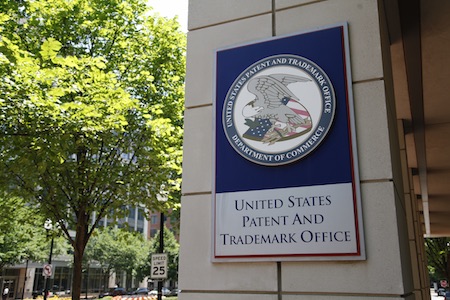
In order to represent clients before the United States Patent Office it is necessary to take and pass the Patent Bar Examination. In order to be registered to practice before the Office the individual seeking registration must: (1) Apply to the USPTO Director in writing by completing an application for registration form supplied by the OED Director and furnishing all requested information and material; and (2) Establish to the satisfaction of the OED Director that the applicant possesses good moral character and reputation and the requisite scientific qualifications and competence to advise and assist patent applicants in the presentation and prosecution of their applications before the Office.
The patent bar exam is a multiple choice examination made up of 100 questions. You will be given 3 hours to complete the first 50 questions and another 3 hours to complete the second 50 questions. The exam is on-demand and can be taken any time. An application to take the patent bar must be completed and submitted to the Office of Enrollment and Discipline (OED) at the United States Patent and Trademark Office (USPTO). If you are either Category A or Category B you can anticipate getting an admission ticket within about 10 to 14 days after a complete application is submitted.
Several years ago, in April 2011, the patent bar examination was updated to test KSR v. Teleflex, Bilski v. Kappos and the 112 Guidelines, which are now all a part of the testable MPEP. Since April 2011, the patent bar examination has undergone constant revision and updating. Unfortunately, the USPTO has not released any patent bar questions since 2003. While the 2003 exams are helpful, the law and rules tested in available, released exams is outdated, making studying from old exams of marginal benefit at best. Those who take the PLI Patent Bar Review Course will have access to many hundreds of exam level difficulty questions to practice from. We continually bring the 2003 and 2002 exams forward so that the questions remain good based on the current law that will be tested. We also continually write new exam level difficulty questions whenever new material is introduced to the exam. We recommend that students do a minimum of 700 exam level difficulty questions after taking the PLI course.
In terms of exam administration, the patent bar exam is delivered via computer and upon receiving an exam registration ticket you must schedule the exam during a 90 day window. You take the exam at a Prometrics testing facility, and there many hundreds of facilities across the United States.
At the end of each 3 hour segment answers will be submitted so it will not be possible to return to the first 50 questions during the second 3 hour segment. It is also important to realize that when time expires the computer will automatically submit the answers whether or not you have selected an answer choice for each question. Therefore, it is extremely important to pace yourself and be sure that you answer every question, even if you only guess. To help you develop strategies to succeed with this time sensitive exam please see MPEP Search Strategies and 10 Patent Bar Exam Strategy Tips. For those who are thinking about taking the patent exam without first taking a patent bar review course I recommend that you read Beware Bad Advice and New Rules, Old MPEP Make for Difficult Study.
Unlike certain other standardized tests there is no penalty for guessing. You merely need to get 70% on the exam, so if you can guess your way to that threshold you will pass. This 70% score to pass does not exactly translate into needing 70 correct out of the 100 questions asked. This is because everyone who takes the exam is given 10 beta questions that do not count toward the overall score. So you really need to get 70% out of the 90 questions that count, or 63 out of 90. There is no way to tell which questions are beta questions though, so you should not assume any question is a beta question and can be skipped. The purpose of these beta questions is presumable to allow the Patent Office to add questions and test them to see if they are good questions prior to adding them to the permanent database of questions that count toward achieving the 70% required.
While you can indeed guess without penalty you should not, however, anticipate being able to guess your way to passing this exam. The Patent Bar Exam is an extremely difficult exam and the pass rate is generally below 50%.
For more information on registering for the patent bar exam please see the General Requirements Bulletin.
About the Patent Bar Exam
For more information please these IPWatchdog.com articles:
- USPTO Moves Ahead with Changes to Patent Bar Registration
- Solutions for Promoting Patent Practitioner Diversity at the USPTO in the Battle Against Systemic Racism
- USPTO’s Drew Hirshfeld on Proposed Changes to Requirements for Patent Bar Registration: It ‘Just Makes Sense’
- Time to ‘Think PCT’: Rethink Your Global Patent Strategy to Preserve Your Seat at the Table
- USPTO to Update Patent Bar Exam in August 2018
- Reflections of the Patent Bar Exam
- Reflections on Taking the Patent Bar Exam
- Everything You Need to Know About the Patent Bar Exam
- Patent Bar Exam: MPEP Search Strategies
- Beware Patent Bar Exam Study Advice
- USPTO to Update Patent Registration Exam April 2013
- Patent Bar Blues: New Rules, Old MPEP Make for Difficult Study
- The Latest Intelligence on the Updated Patent Bar Exam
- USPTO Updates Registration Examination for New Patent Practitioners
- Patent Bar Exam Refresh: PTO Now Testing New Materials
- USPTO Changes Format and Links to MPEP
- Legal Jobs: Patent Job Market Shows Signs of Improvement
- Becoming Patent Bar Eligible: What Courses are Acceptable?
- Buyer Beware! Counterfeit Patent Bar Review Courses on eBay
- Vote for Chance to Win FREE PLI Patent Bar Review Course
- PTO Updates Patent Bar Exam to Test AIA & Appeal Rules
- Patent Reform and Patent Bar Review, What You Should Know
- Patent Bar Exam Craziness, Do You Know How Long a Month is?
- New Look Patent Bar Examination Continues to Evolve
- Top 10 Reasons to Take the PLI Patent Bar Review Course
- USPTO Updates Registration Exam for Patent Practitioners
- USPTO Announces Impending Update to Patent Bar Exam
- PLI Patent Bar Review Summer Tour 2010
- PLI Patent Bar Review New Live Course at Santa Clara May 24-28
- USPTO Announces Live Administered Exam Schedule for 2010
- PLI Patent Bar Review Spring/Summer Tour 2010
- What a Soon to be Patent Agent Learned from Googling Himself
- Does My Degree Qualify Me to Take the Patent Bar?