
![[IPWatchdog Logo]](https://ipwatchdog.com/wp-content/themes/IPWatchdog%20-%202023/assets/images/temp/logo-small@2x.png)
Posts Tagged: "innovation"
Patents Don’t Monetize Themselves: Turning Portfolios from Cost Centers into Revenue Assets
Imagine a company spends millions of dollars constructing a new office building in a prime downtown location. The company pays for maintenance, utilities, insurance, landscaping, repairs, security, and taxes. The building is well designed, professionally managed, and expensive to maintain. But it sits empty. No tenants. No leases. No revenue. That would strike most executives as irrational. Yet many companies treat patent portfolios in exactly the same way. They spend millions building and maintaining patent portfolios around the world. But when asked what revenue the portfolio generates, the silence is deafening.
Automating the Patent Process at the USPTO to Save Inventors Money
Have you ever drafted a claim set with a second claim that began, “the system of claim 2, wherein…” when you meant to write “the system of claim 1”? It’s embarrassing because every first-year patent attorney knows that a dependent patent claim cannot depend on itself. However, making the error is inevitable when you draft a large number of patent applications. The good news is, if you upload such a claim to today’s Patent Center (where patent applications are filed), you will be provided with the following alert: “The claims appear to contain an improper dependency with at least one claim that depends on a missing or canceled claim. Please review and revise if necessary”. How beautiful is this? Now you can self-correct before your patent application is even filed. Ten years ago, you would have to go back and forth with a patent examiner to correct the error.
Readers React: What to Expect After the Supreme Court’s Hikma Ruling
Thursday’s Supreme Court ruling in Hikma v. Amarin has been discussed as a definitive win for the generics industry and may have implications beyond pharmaceutical and Hatch-Waxman cases. The Court criticized the U.S. Court of Appeals for the Federal Circuit (CAFC) for its trend of what the Court called focusing on “whether the relevant statements could be read by medical providers as instructions to infringe” when judging induced infringement in Hatch-Waxman cases. Below, stakeholders weigh in on the upshot of the ruling and what it means for pharmaceutical innovation going forward.
Hikma Ruling Looms Large in House IP Subcommittee Hearing Debating Legislation Favoring Generic Drugmakers
At approximately the same moment that the U.S. Supreme Court handed down today’s landmark ruling in Hikma v. Amarin, the House Judiciary’s Subcommittee on Courts, Intellectual Property, Artificial Intelligence, and the Internet began a hearing on balancing medical innovation and access to generic drugs. Much of the hearing’s discussion was focused on proposed patent bills that favor generic drug makers–though whether they would ensure that Americans actually pay less for any drug, branded or otherwise, remains unclear.
SCOTUS’ Hikma Ruling Changes the Game for Induced Infringement Pleadings
The U.S. Supreme Court today issued its decision in Hikma Pharmaceuticals USA v. Amarin Pharma, Inc., holding that Amarin failed to “plausibly allege” that Hikma actively induced infringement of its “icosapent ethyl” product, marketed as Vascepa. The decision, which was originally seen as a so-called skinny label case applying narrowly to the pharmaceutical industry and Hatch-Waxman litigation, scolded the U.S. Court of Appeals for the Federal Circuit (CAFC) for its recent approach and has potentially far-reaching implications for the induced infringement standard across sectors.
Biopharmaceutical Innovation: The Patent Imperative
America’s $150 billion per year private sector investment in biopharmaceutical research and development (R&D) does more than offer comfort. Increasingly, American innovators are curing or effectively eliminating the medical threat from many diseases and conditions. Witness, cures for Hepatitis C, GLP-1s for weight loss, COVID-19 vaccines, and HIV prevention at virtually 100% effectiveness, alongside stem cell therapies, gene editing, and CAR-T therapies for previously untreatable cancers. For those suffering from rare or untreatable disease, as well as chronic conditions, this is an era of unprecedented hope.
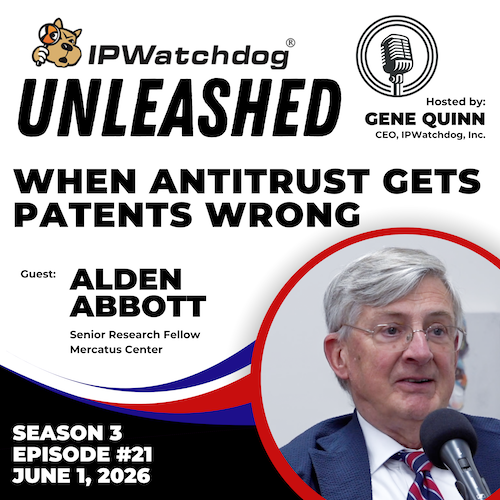
Efficient Infringement Rewards Copycats and Erodes Competition | IPWatchdog Unleashed
For much of the last four decades, American innovation policy has rested on a premise that should be obvious but too often is not: strong intellectual property rights are not an obstacle to competition. Quite the opposite—strong IP rights are the precursor to robust competition. The alternative to a robust patent system is not some frictionless utopia of open competition. The alternative is secrecy, copying, and underinvestment. If patents are too weak, companies will rely more heavily on trade secrets. That means less disclosure, less technical diffusion, and fewer opportunities for others to build upon what has been invented. Weak patents do not democratize innovation—they often bury it. Weak patents also reward copycats who find it far more expedient and financially rewarding to take rather than to innovate themselves. These truths were the main point at the center of my recent conversation with Alden Abbott, Senior Research Fellow at the Mercatus Center at George Mason University and former General Counsel of the Federal Trade Commission.
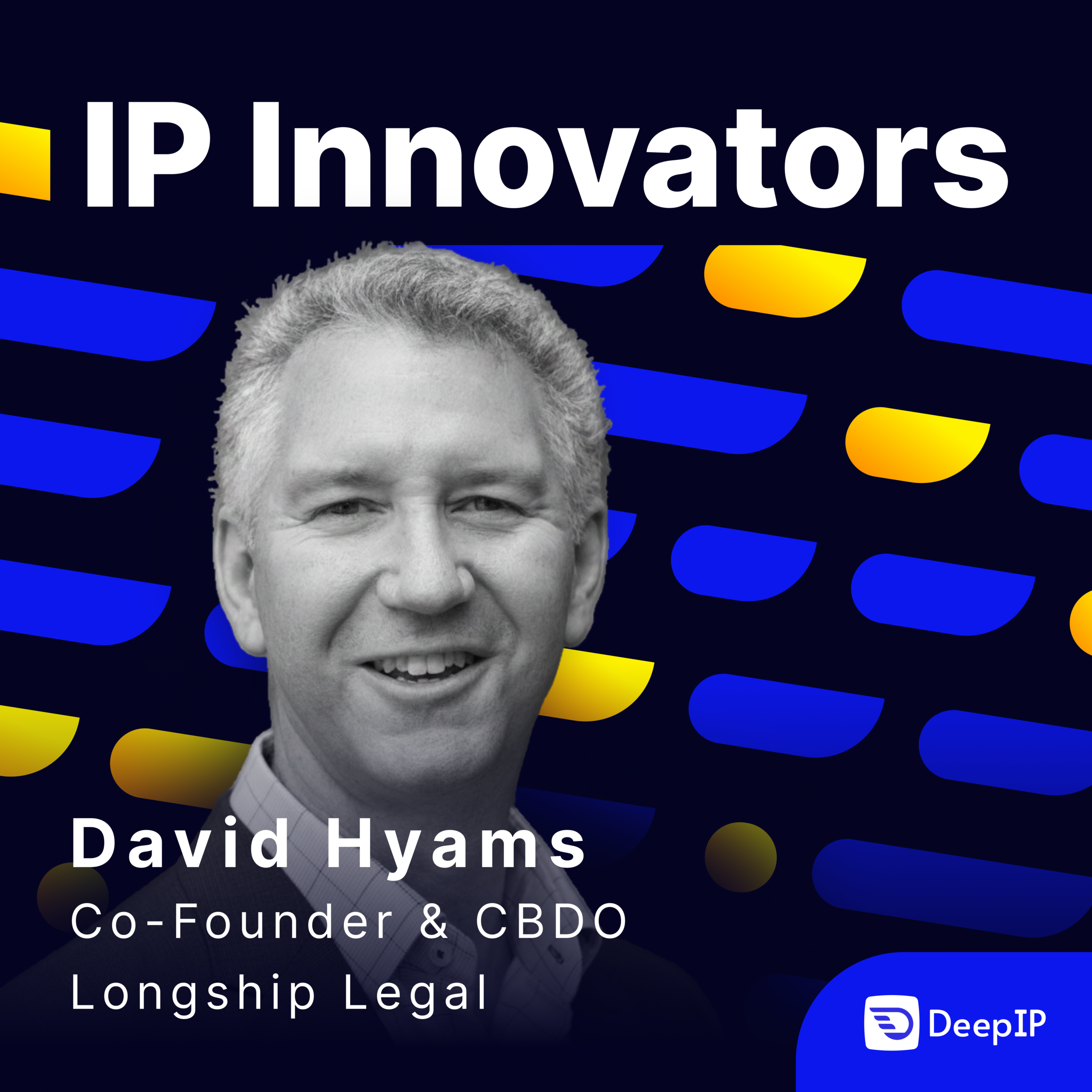
The Business-First IP Playbook: David Hyams on Mapping Business Value and the Limits of General LLMs
In the latest episode of IP Innovators, host Steve Brachmann sits down with David Hyams, Co-Founder and Chief Business Development Officer of Longship Legal, to explore what it looks like to build an IP practice around business value rather than patent volume. Drawing on a career that spans big law in Boston, in-house roles at Bose Corporation and AOL, and a cleantech startup, Hyams makes a case that the most important questions in IP strategy have nothing to do with patentability, and everything to do with understanding what a company is actually trying to win.
Patent Pruning Is Not Optional: Why Portfolio Discipline Must Be a Core IP Function
Most patent portfolios are overbuilt and under-managed. That is not a criticism of any particular company or patent department. It is simply the predictable result of how patent portfolios are created. Companies innovate. Business leaders demand more filings. Engineers generate invention disclosures. Outside counsel prosecute applications. Patents issue. Then years pass, products change, markets move on, competitors pivot, and strategic priorities evolve. Often—if not frequently—the patent portfolio remains the same, as if legacy assumptions and strategy remain relevant even though they no longer match business or market realities.
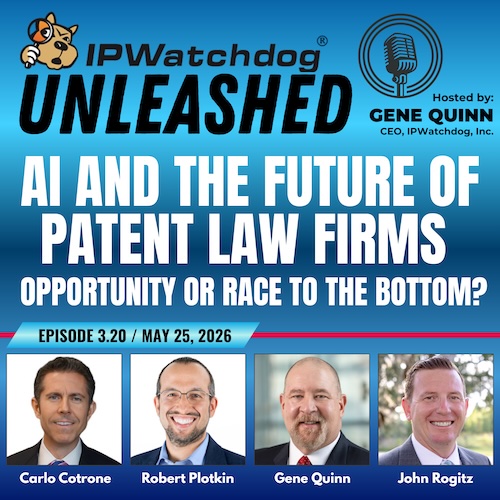
Patent Law Firms Face an AI Reckoning: The New Economics of Patent Practice | IPWatchdog Unleashed
While AI can improve research, drafting, analysis, and overall work product quality, the panel emphasized that it is not a magic button and cannot replace expert legal judgment. The most effective use of AI in patent practice is incremental, targeted, and lawyer-directed—more co-pilot than autopilot. Panelists explored the risks created when inventors, clients, or law firms over-rely on AI-generated disclosures, patent application critiques, or claim strategy recommendations, including the potential for increased attorney workload, inventorship complications, technical inaccuracies, and downstream litigation vulnerabilities. The conversation ultimately framed AI as both a market disruptor and a strategic opportunity for patent law firms. Firms that respond defensively or compete solely on price risk being pushed into an unsustainable race to the bottom. Firms that lean into client education, workflow redesign, transparent billing expectations, disciplined AI usage, and higher-value counseling will be better positioned to compete. The panel made clear that AI will not eliminate the need for sophisticated patent counsel; it will expose which firms are genuinely strategic partners and which are merely labor providers.
Federal Circuit Upholds JMOL of Noninfringement for DISH in ClearPlay Patent Dispute
The U.S. Court of Appeals for the Federal Circuit (CAFC) issued a decision today in ClearPlay, Inc. v. DISH Network L.L.C., affirming the United States District Court for the District of Utah’s grant of judgment as a matter of law (JMOL) of noninfringement in favor of DISH Network L.L.C. and EchoStar Technologies LLC. The ruling held that the trial evidence, even viewed in the light most favorable to ClearPlay, was insufficient to sustain the jury’s infringement verdict on either of the asserted patents.
The USPTO’s AI Agenda: Examining the Office’s AI Tools and Guidance for Practitioners
The U.S. Patent and Trademark Office (USPTO) is going through a significant digital transformation. With the Office seemingly updating its procedures as rapidly as the latest AI model, it’s important to track what this means for IP practice. AI is transforming the tools governing how the Office now processes what is filed, and the Office’s vacillations on AI inventorship should be top of mind for every practitioner.
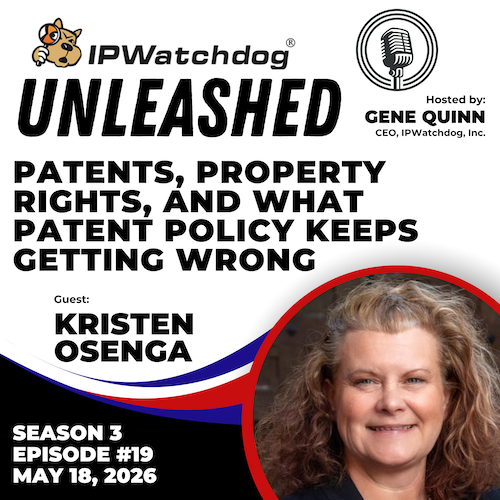
Patents, Property Rights, and What Patent Policy Keeps Getting Wrong | IPWatchdog Unleashed
This week on IPWatchdog Unleashed, I spoke with Kristen Osenga, who is a Professor of Law and Associate Dean for Academic Affairs at the University of Richmond School of Law. Kristen is a familiar voice to many in the patent community. She has been a regular participant in serious conversations about patent law, standard essential patents (SEPs), antitrust, competition policy, injunctions, and the broader innovation ecosystem.
Insourcing of Corporate IP Work in the Age of AI: More Reasons to Say Yes
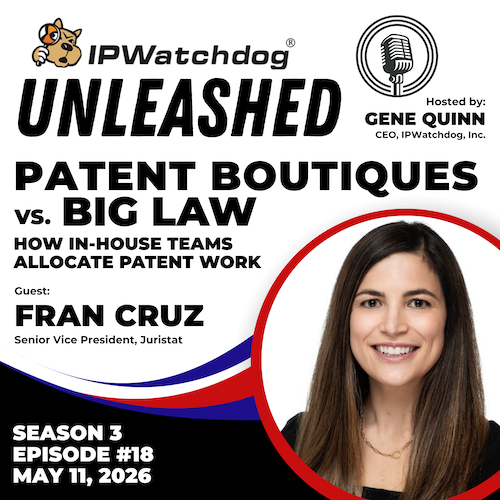
“Should we insource IP work?” This perennial question is posed by in-house professionals and organizational leaders in corporations, universities, and other institutions—and dreaded by outside IP counsel, who fear loss of insourced client business. Deceptively binary and straightforward, the insourcing question often can’t be answered without in-house teams first exploring a host of underlying considerations. Their decision-making calculus may confront grey areas and vexing tradeoffs, ultimately coming down to rough cost-benefit analyses and gut instincts.
Squires and Stewart Hear Panelist Views on Desired PTAB Changes
The U.S. Patent and Trademark Office (USPTO) today held its third PTAB Listening Session, this one focused on Patent Trial and Appeal Board (PTAB) Administration and Reform. Panelists on both the petitioner and patent owner sides, as well as academics, IP policy experts and judges, weighed in on what changes need to be made to the PTAB to strike the balance that will most benefit the U.S. IP system. While the suggestions varied, most of the panelists agreed that greater clarity and consistency is what’s urgently needed at the moment.
Varsity Sponsors
![[Advertisement]](https://ipwatchdog.com/wp-content/uploads/2026/05/Patent-Masters-2026-sidebar-700x500-rev1.jpg)
![[Advertisement]](https://ipwatchdog.com/wp-content/uploads/2026/05/Protege-in-PatentSight-product-350x250-Ad-A.png)
![[Advertisement]](https://ipwatchdog.com/wp-content/uploads/2026/05/LexisNexis-Jun-11-2026-sidebar-700x500-1.jpg)

Latest IPW Posts
Patents Don’t Monetize Themselves: Turning Portfolios from Cost Centers into Revenue Assets
June 8, 2026 @ 01:32 pmAutomating the Patent Process at the USPTO to Save Inventors Money
June 8, 2026 @ 11:15 amReaders React: What to Expect After the Supreme Court’s Hikma Ruling
June 7, 2026 @ 12:15 pm
Latest Podcasts

IPWatchdog Events
Webinar: How AI Is Transforming IP Strategy Across the Patent Lifecycle
June 11 @ 12:00 pm - 1:00 pm EDTWebinar: AI in Patent Drafting – When to Use Generative AI – and When Not To
June 25 @ 12:00 pm - 1:00 pm EDTFrom IPWatchdog
![[Advertisement]](https://ipwatchdog.com/wp-content/uploads/2021/12/WEBINAR-336-x-280-px.png)
![[Advertisement]](https://ipwatchdog.com/wp-content/uploads/2021/12/Ad-4-The-Invent-Patent-System™.png)