
![[IPWatchdog Logo]](https://ipwatchdog.com/wp-content/themes/IPWatchdog%20-%202023/assets/images/temp/logo-small@2x.png)
All Posts
Other Barks & Bites for Friday, March 20: CAFC Approves Flexible Domestic Industry Analysis at ITC; MFN Pricing Threatens $167 Trillion in Medical Innovation’s Societal Value; and UK Has No Preferred Option for AI and Copyright
This week in Other Barks & Bites: the Federal Circuit okays the U.S. International Trade Commission’s flexible analysis of the technical and economic prongs of the domestic industry requirement; the University of California tops the National Academy of Inventors list of top universities obtaining U.S. utility patents last year; the EU’s highest court rules that first requests for data access under the General Data Protection Regulation may be excessive if part of a systemic pattern of entering data claims for compensation; and more.
Steve Brachmann
March 20, 2026
 0
0
We Need a More Permanent Solution to Inter Partes Review Overreach
U.S. Patent and Trademark Office (USPTO) Director John Squires stated in his Senate confirmation hearing last year that “with born strong patents and robust quality marks we can reclaim America’s primacy, revitalize industry and growth, proudly export our culture, boost national security and improve our lives.” If the goal is to have “born strong patents”, we must be honest about what is born with patents and what is not. For instance, a credible mark of novelty is born with every patent—that much is clear. However, novelty is not just technical newness—it is also market impression. If novelty were only technical newness, people would own patents without their technology ever being used in the market. There would be no point to the patent system. This means that the rest of patents—their assertion power, damages recovery power, term limitation, claim bundling provision, inter partes review (IPR) fee requirement, and more—must also be part of the birth. This is how to create born strong patents.
John Powers
March 20, 2026
0
The Supreme Court Must Revisit Prosecution Laches—And the Industry Should Speak Up
The latest chapter in the long-running saga of inventor Gil Hyatt is beginning to unfold. The current fight is over prosecution laches—and whether the doctrine even exists. In his last appeal to the Federal Circuit, Hyatt argued that prosecution laches is not available in Section 145 proceedings because it is inconsistent with the Patent Act of 1952, as confirmed by recent U.S. Supreme Court rulings in Petrella v. Metro-Goldwyn-Mayer (2014) and SCA Hygiene Products Aktiebolag v. First Quality Baby Products (2017). Whether Hyatt is correct about prosecution laches being inconsistent with the 1952 Patent Act, it is clear that the Supreme Court has unequivocally ruled in both Petrella and SCA that laches simply does not exist when there is a statutorily prescribed timeframe to act.
Gene Quinn
March 19, 2026
1
Patent Prosecution in the AI-Native Future: How IP Counselors Can Succeed
As discussed in my prior article, the growing adoption and sophistication of assistive AI tools for patent prosecution are paving the way for material business and career impacts, such as decreased prosecution revenue and reduced staffing over the long term. Despite these potential risks, practitioners and enterprises may experience widely differing outcomes due to their client mix, expertise, and capacity to navigate shifting winds to advantage.
Carlo Cotrone
March 19, 2026
1
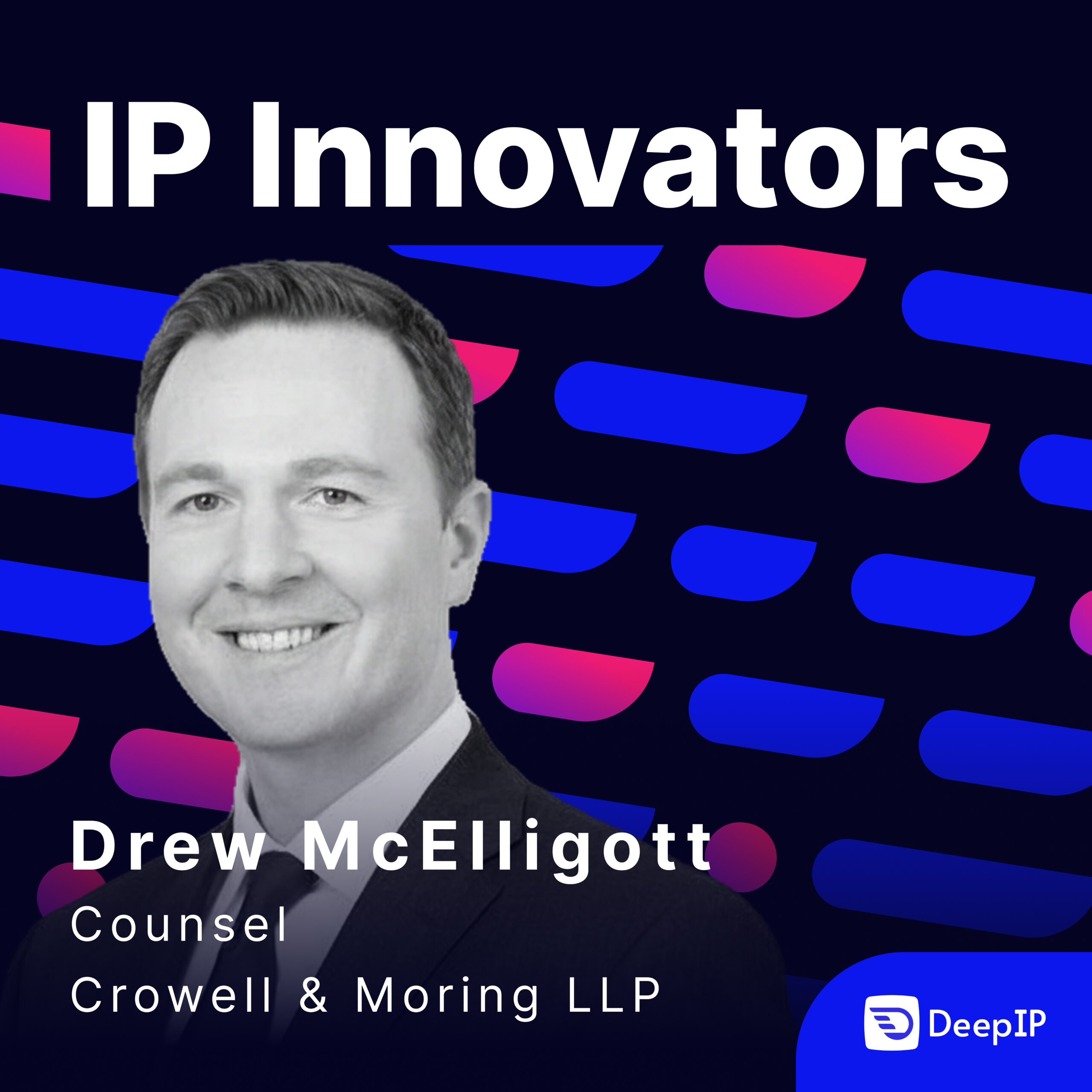
IP Innovators: Writer’s Block Is Dead: Drew McElligott on AI in Legal Practice
In the latest episode of IP Innovators, host Steve Brachmann sits down with Drew McElligott, Counsel at Crowell & Moring, to explore how artificial intelligence (AI) is reshaping legal workflows from the inside of a major law firm. While much of the conversation around AI focuses on disruption, McElligott offers a grounded, practitioner-driven perspective: one of the most immediate and impactful changes is how patent attorneys begin drafting. As AI tools become more integrated into legal practice, they are redefining the early stages of patent drafting and eliminating one of the most persistent challenges in writing: the blank page.
Francois-Xavier Leduc
March 19, 2026
0
Thoughts on Finesse Wireless‘s Framing of Datascope as an ‘Infamous’ Example of Federal Circuit Overreach
In 2008, a medical device company I represented, Datascope Corporation, won a hard-fought victory at the U.S. Court of Appeals for the Federal Circuit. That court reversed a verdict of patent infringement rendered by a federal jury in Baltimore in a suit brought by Johns Hopkins University and its licensee against my client. Johns Hopkins Univ. v. Datascope Corp., 543 F.3d 1342 (Fed. Cir. 2008).
Roy Wepner
March 18, 2026
0
Delaware Court Denies Sony Subsidiary Summary Judgment in Cinemavault Trademark Dispute
The U.S. District Court for the District of Delaware on Tuesday denied a motion for summary judgment in Cinemavault, Inc. v. Gameshow Network, LLC, allowing a trademark infringement and unfair competition lawsuit to proceed to trial. Judge Joel H. Slomsky rejected Gameshow Network, LLC’s arguments that Cinemavault, Inc. failed to continuously use its trademark, that Cinemavault, Inc. was judicially estopped from bringing a likelihood of confusion claim, and that the relevant Lapp factors precluded Cinemavault from establishing a likelihood of confusion between the two marks at issue.
Rose Esfandiari
March 18, 2026
0
What They Don’t Teach You In School About Corporate Patent Monetization
Each year, companies invest significant financial resources building and maintaining patent portfolios. But instead of contributing to the bottom line, the patent portfolio often evolves into a growing cost center burdened by maintenance fees, prosecution expenses, and legal overhead. The patents protect some of the company’s products, and make nice plaques for the corporate hallways, but serve little other purpose. Patent monetization offers an opportunity to reverse this dynamic. Done correctly, it can transform dormant intellectual property into a durable revenue stream. Done poorly, it can create reputational risk, misaligned incentives, and wasted capital.
Michael Gulliford
March 18, 2026
7
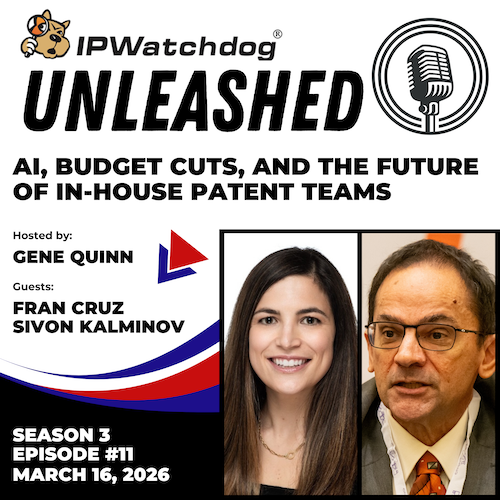
AI, Budget Cuts, and the Future of In-House Patent Teams | IPWatchdog Unleashed
It is hardly a secret that corporate IP departments are under growing pressure to do more with less. Budgets are tightening, leadership increasingly expects patents to deliver measurable business value, and artificial intelligence is rapidly changing how patent work can be performed. What does this mean for the future of in-house patent teams—and for the law firms that support them? Our conversation explores several major trends shaping patent strategy today, including the shift toward quality over quantity in patent portfolios, the growing emphasis on maintenance fee pruning and portfolio discipline, and the evolving relationship between in-house counsel and outside patent law firms. We also examine how companies are using competitive intelligence, patent analytics, and emerging tools to guide filing strategy, manage costs, and identify licensing and enforcement opportunities. We also tackle one of the biggest questions facing the IP profession: What can AI realistically do for patent practitioners today—and what can’t it do yet?
Gene Quinn
March 17, 2026
1
Organizations Warn Fast-Track of Bill to Separate Copyright Office from Library of Congress Would Be a ‘Grave Mistake’
Spurred by reports that House leaders are trying to fast-track a bill to separate the U.S. Copyright Office from the Library of Congress, a coalition of consumer rights, industry, open internet and library groups has again sent a letter to the House Committee on Administration urging it to consider the bill on the regular timeline to avoid “unintended consequences.” A full committee markup of the bill is scheduled for tomorrow, March 18,
Eileen McDermott
March 17, 2026
2
Senators Blackburn, Welch Call for AI Video Apps to Cease IP Infringement
Yesterday, U.S. Senators Marsha Blackburn (R-TN), Chairman of the Senate Judiciary Subcommittee on Privacy, Technology, and the Law, and Peter Welch (D-VT) sent a letter addressed to Liang Rubo, CEO of Chinese technology company ByteDance, urging the immediate shutdown of ByteDance’s video generation platform Seedance 2.0. Calling ByteDance’s recent pledges to respect copyright “a delay tactic,” the Senators join a growing chorus of copyright advocates raising alarms about rampant infringement being committed by users of Seedance and other generative artificial intelligence (AI) platforms.
Steve Brachmann
March 17, 2026
1
Harrity & Harrity is Seeking an Innovation Specialist – Patent Technology
Harrity & Harrity is seeking a motivated and detail-oriented Innovation Specialist in Patent Technology to join its growing team. This unique role sits at the exciting intersection of patent law, artificial intelligence, and software development. Reporting directly to the software development team leads, you will play a crucial role in shaping the AI-powered tools used by our patent professionals and clients. You’ll play a hands-on role in prompt engineering, tool testing, documentation, support, and customer onboarding, and you will be a key player in the transformation of patent practice through AI, enabling better client outcomes and defining best practices in a rapidly evolving field.
JobOrtunities Help Wanted
March 17, 2026
0
CAFC Affirms Dismissal for Lack of Standing in Software Patent Dispute
The U.S. Court of Appeals for the Federal Circuit (CAFC) today issued a decision in Applications in Internet Time, LLC v. Salesforce, Inc., affirming a district court’s dismissal of AIT’s patent infringement suit against Salesforce for lack of constitutional standing. The court determined that the district court correctly concluded that Applications in Internet Time, LLC (AIT) had no exclusionary patent rights at the inception of the lawsuit. It also held that the district court did not abuse its discretion in denying equitable relief to cure the constitutional standing defect.
Rose Esfandiari
March 16, 2026
0
Netlist, Samsung Spar Over RPI Requirements for PTAB Trial Petitions in Requests for Director Review
Last week, consumer electronics giant Samsung filed responses to requests for Director Review by patent owner Netlist in validity proceedings instituted at the Patent Trial and Appeal Board (PTAB). Netlist is contending that the trials should be dismissed because Samsung failed to identify all real parties in interest (RPIs) in the PTAB petitions challenging Netlist patent claims directed to dynamic random access memory (the ‘087 patent) and memory modules for reduced noise in signal transmissions (the ‘731 patent).
Steve Brachmann
March 16, 2026
4
NCLA Revives Newman Case Against Moore with Supreme Court Petition
The New Civil Liberties Alliance (NCLA) has filed a petition for a writ of certiorari asking the U.S. Supreme Court to review its case against U.S. Court of Appeals for the Federal Circuit (CAFC) Chief Judge Kimberly Moore for what the NCLA dubs the “unlawful” removal of Newman from her duties on the court.
Eileen McDermott
March 13, 2026
6
Varsity Sponsors
![[Advertisement]](https://ipwatchdog.com/wp-content/uploads/2026/02/Junior-Apr-7-2026-sidebar-700x500-1.jpg)

Latest Podcasts




IPWatchdog Events
Webinar: Unlocking New Capabilities – The Real ROI of AI in Patent Practice
April 2 @ 12:00 pm - 1:00 pm EDTCLE Webinar: All in the Prompt – Crafting AI Prompts for Precision Outputs
April 7 @ 12:00 pm - 1:00 pm EDTPatent Masters™ 2026 – Portfolios, Licensing and Enforcement
June 8 @ 8:00 am - June 10 @ 5:00 pm EDT